ADVERTISEMENT
Absolutely! Here’s a complete article for your DIY Bioplastic Suncatchers 🌿♻️ recipe — perfect for blog posts, social media captions, or printable project guides. This version balances eco-conscious messaging, family fun, and monetization tips for crafters or small business owners:
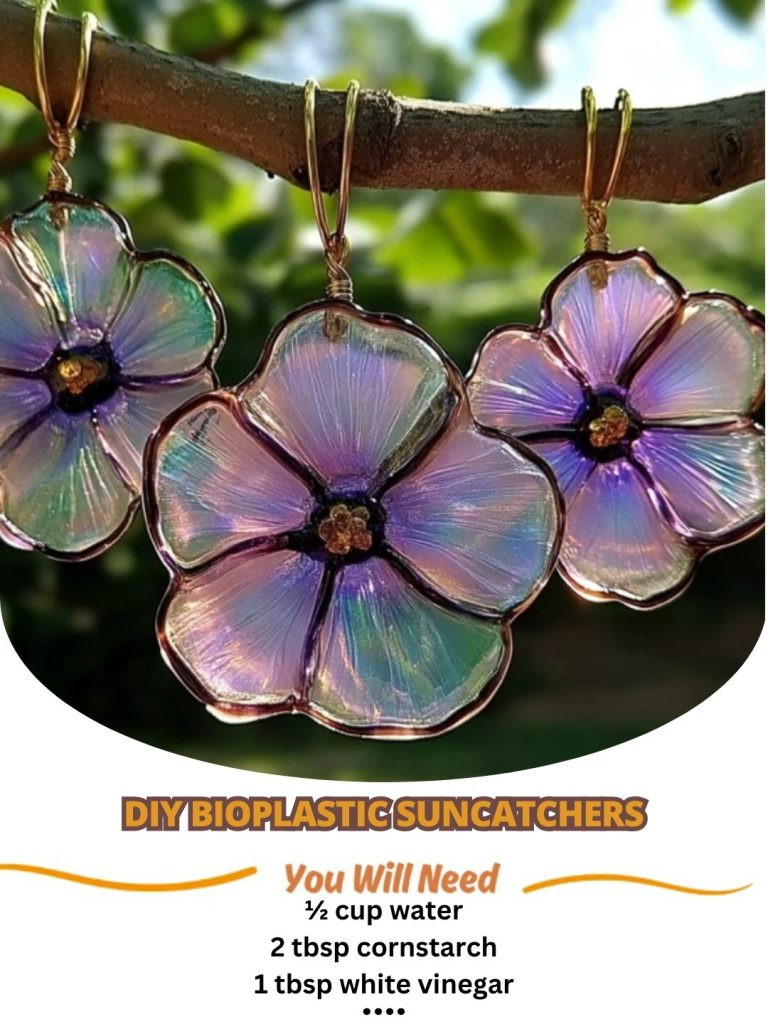
DIY Bioplastic Suncatchers 🌿♻️
Looking for an easy, eco-friendly craft that turns kitchen ingredients into art? Say hello to DIY Bioplastic Suncatchers — a simple, sustainable project that’s perfect for kids, crafters, educators, and makers of all ages.
Whether you’re adding sparkle to your windows, teaching a science-meets-art lesson, or creating a handmade product to sell, this recipe is a low-waste, high-reward winner.
☀️ What Are Bioplastic Suncatchers?
When hung in the window, they glow beautifully in the light — and the best part? They’re compostable, non-toxic, and fully customizable.
🧪 Ingredients & Materials
- 1 tbsp gelatin powder (unflavored)
- 3 tbsp boiling water
- Food coloring or natural dyes (like beet juice, turmeric, spirulina)
- Biodegradable glitter (optional)
- Small containers or silicone molds
- Toothpicks or craft sticks (for mixing)
- Hole punch (for hanging)
- String or twine
✨ Optional for texture: Add pressed flowers, leaves, or seeds for a nature-inspired look.
🛠️ Step-by-Step Instructions
- Prepare the Bioplastic Mix
In a small bowl, stir together 1 tbsp of gelatin and 3 tbsp of boiling water. Mix until the gelatin is completely dissolved. - Add Color & Customization
Divide the mixture into small cups. Add a drop or two of food coloring (or natural dyes). Swirl gently with a toothpick. Add glitter, flowers, or other tiny elements if desired. - Pour into Molds
Pour the mixture into silicone molds, cookie cutters on wax paper, or onto a smooth tray (lined with parchment) for freeform shapes. - Dry & Set
Let the suncatchers dry flat for 24–48 hours. You’ll see the mixture harden and shrink slightly as it sets. - Punch & Hang
Once fully dry, punch a hole near the top and tie with string. Hang in a sunny window to catch the light!
🌱 Why Bioplastics?
✅ No toxic fumes
✅ No synthetic dyes needed
✅ No microplastics left behind
💡 Pro Tips for Monetization
1. Sell Seasonal Suncatchers
- Create themed collections (Spring Florals, Fall Leaves, Rainbow Pride, etc.).
- Offer custom colors or personalized designs.
- Market as zero-waste window décor.
