ADVERTISEMENT
🧪 Why Temperature Stability Matters
Eggs have a natural protective coating called the bloom that helps keep bacteria out. Once eggs are refrigerated, this coating is washed away (usually during processing), making eggs more vulnerable.
🥶 Where to Store Eggs Properly
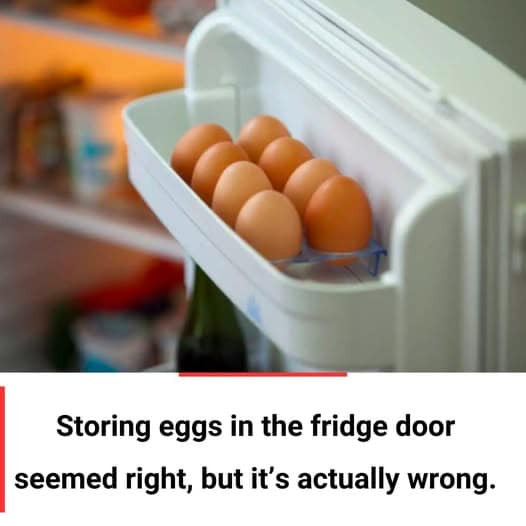
- Store eggs inside the main body of the refrigerator rather than the door.
- Place them on a shelf where the temperature is consistent and cold.
- Keep eggs in their original carton to prevent them from absorbing strong odors and flavors from other foods and to protect them from damage.
🔍 Additional Tips for Egg Storage
- Avoid washing eggs before storing — washing removes the protective bloom.
- Use eggs within the recommended timeframe (usually 3-5 weeks after purchase).
- If your eggs have cracks, discard them to avoid contamination.
🚫 Common Myths
- Myth: Storing eggs in the fridge door saves space.
Fact: Convenience shouldn’t compromise food safety. Use shelf space for eggs instead. - Myth: Eggs last longer at room temperature.
Fact: In many countries, eggs are refrigerated to prolong freshness and reduce bacteria risk. Follow local guidelines.
🥚 Final Thoughts
Keeping eggs in the fridge door might seem handy, but the temperature swings make it the worst place for safe, long-lasting eggs. Store them inside your fridge where the temperature stays steady — your health and your eggs will thank you!
Would you like tips on how to organize your fridge for maximum freshness or recipes featuring eggs? Just let me know!
